
Brazilian Jiu-Jitsu vs Other Martial Arts - A Guide for Adults
Updated: Feb 26
Choosing a martial art as an adult can feel overwhelming. With so many disciplines available, it is natural to wonder which one truly fits your goals, lifestyle, and physical condition.
Some adults want practical self-defence, while others seek fitness, stress relief, or a way to connect with a supportive community.
In recent years, Brazilian Jiu-Jitsu has gained remarkable popularity among adults across Canada and beyond.
But how does it compare to traditional striking arts like Karate or Taekwondo? Is it really the best martial art for adults, or does that depend on individual goals? Learn about all of this in our expert guide …
Click here to learn more about the Ultimate Guide to Brazilian Jiu-Jitsu for Adults ...
What Makes Brazilian Jiu-Jitsu Unique for Adults
Brazilian Jiu-Jitsu, often called BJJ, is a grappling-based martial art that focuses on technique, leverage, and strategy rather than brute strength
This martial arts program is especially appealing to adults who want something realistic, mentally engaging, and adaptable. If you’re also looking to get enrolled in an instructor-led BJJ adults’ program, NKS Maple has got you covered!
Here’s what makes Brazilian Jiu-Jitsu unique for adults -
Focus on Technique Over Strength
One of the defining principles of Brazilian Jiu-Jitsu is that a smaller person can control and submit a larger opponent using proper technique. Instead of relying on speed or striking power, BJJ emphasises leverage, balance, and timing.
For adults starting in their 30s, 40s, or even 50s, this is significant. You do not need a background in sports or exceptional athletic ability to begin. Progress comes from learning positions, understanding body mechanics, and practising controlled sparring.
This technical emphasis is a key reason many people searching for the best martial art for adults eventually choose BJJ. It allows steady improvement without requiring explosive strength.
Ground-Based Self-Defence
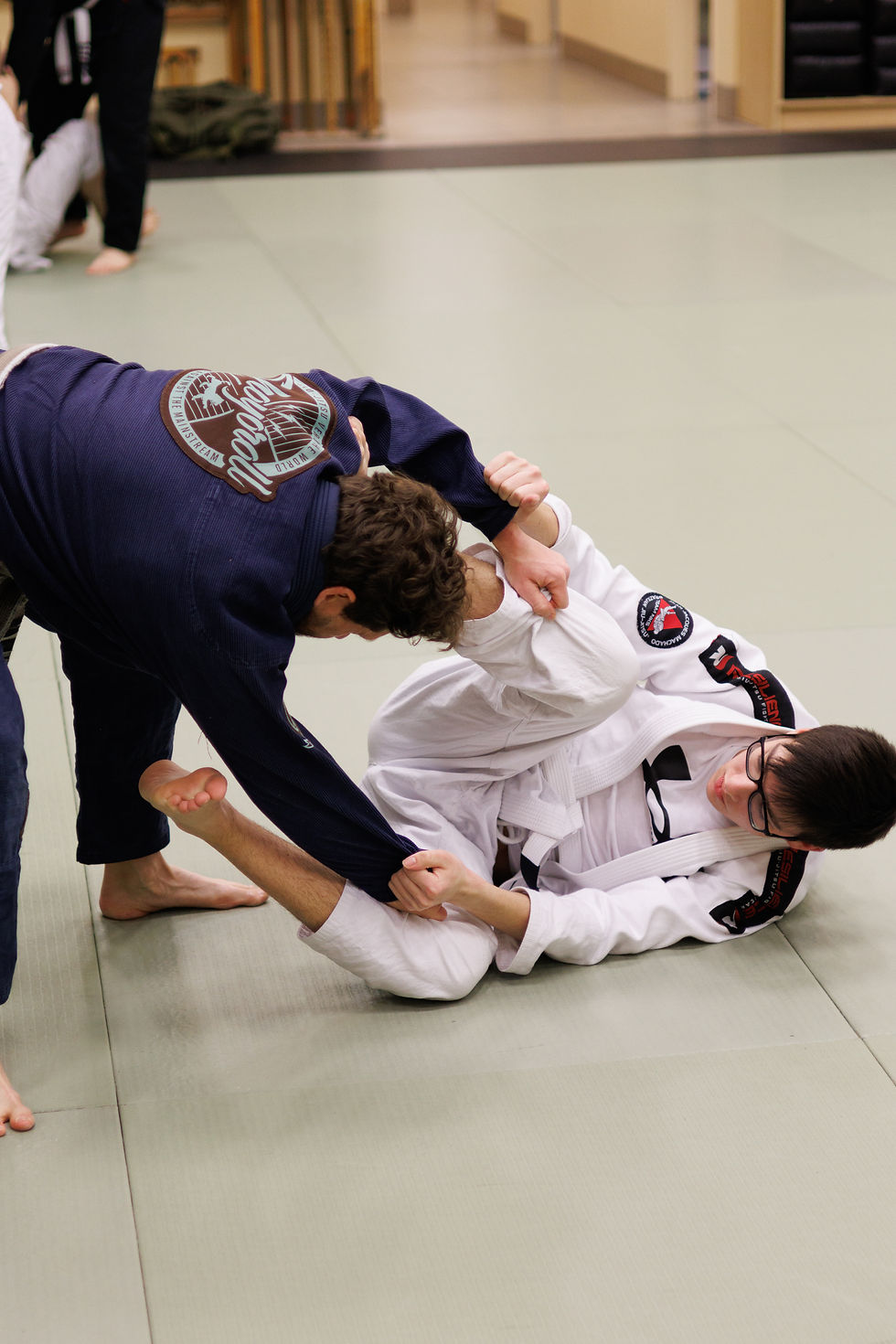
Unlike many traditional martial arts that focus primarily on standing strikes, Brazilian Jiu-Jitsu specialises in ground fighting. In real-world situations, many altercations end up on the ground, where striking skills alone may not be enough.
BJJ teaches -
Escapes from inferior positions
Positional control
Joint locks and chokeholds
How to neutralise a larger opponent safely
According to the Federal Bureau of Investigation, simple assault is the most common violent crime in the United States, with over 11 million cases reported in 2022.
However, in Canada, crime is reported differently, but fights still happen often, which makes learning basic self-defence and ground-control skills extremely significant.
Fitness and Mental Benefits
BJJ is a full-body workout disguised as problem-solving. Each training session combines strength, mobility, endurance, and coordination.
Research shows that a typical Brazilian Jiu-Jitsu session can burn between 500 and 1,000 calories per hour, depending on intensity. This makes it highly effective for adults seeking weight management and cardiovascular improvement.
Beyond the physical aspect, BJJ builds mental resilience. Rolling, the term for sparring, requires constant adaptation. You must stay calm under pressure, think strategically, and manage discomfort.
For many adults balancing work and family life, this mental training becomes just as valuable as the physical benefits.
Brazilian Jiu-Jitsu Vs Other Popular Martial Arts
Understanding BJJ vs Karate for adults and other disciplines requires looking at what each martial art emphasises. No system is universally superior. The right choice clearly depends on your objectives.
Read more about what our experts say on The Benefits Of Martial Arts For All Ages ...
BJJ Vs Karate
Karate is a traditional striking art that focuses on punches, kicks, stances, and forms (kata). It develops discipline, coordination, and controlled power.
In a Brazilian jiu jitsu comparison with Karate -
Karate focuses on striking and distance management.
BJJ focuses on grappling and submissions, especially on the ground.
Many Karate schools emphasise structured forms, while BJJ training heavily incorporates live sparring from early stages.
For adults prioritising self-defence in close-contact situations, BJJ often feels more practical. For those who prefer structured drills and striking techniques, Karate may be more appealing.
When people talk about BJJ vs Karate for adults, they often focus on what works in real life. In Brazilian Jiu-Jitsu, students practise moves with partners who actively resist, which helps them stay calm and confident in tough situations.
BJJ Vs Taekwondo
Taekwondo is well known for dynamic kicks and athletic movement. It is also an Olympic sport, with a strong focus on speed and flexibility.
In comparison -
Taekwondo emphasises high kicks and point-based sparring.
BJJ emphasises positional control and submissions.
Adults who enjoy fast-paced, striking-based competition may lean towards Taekwondo. However, those looking for close-contact control and self-defence may find BJJ more aligned with their goals.
BJJ Vs Boxing
Boxing is one of the most effective striking arts in the world. It develops footwork, timing, and powerful punching combinations.
When comparing -
Boxing trains hand strikes and defensive head movement.
BJJ trains in grappling, submissions, and ground survival.

Boxing provides excellent cardiovascular conditioning. However, it involves repeated head contact during sparring, which some adults may wish to avoid. BJJ training typically allows practitioners to spar intensely without absorbing head strikes, which can be appealing for long-term practice.
BJJ Vs Muay Thai
Muay Thai, often called the art of eight limbs, uses punches, kicks, elbows, and knees. It is highly effective for stand-up fighting and clinch work.
The key differences include -
Muay Thai specialises in striking and clinch strikes.
BJJ specialises in takedowns, ground control, and submissions.
Interestingly, many modern mixed martial arts fighters train in both disciplines. They complement one another well.
However, for adults seeking a single primary art, the choice depends on whether they prefer striking or grappling as their foundation.
Brazilian Jiu-Jitsu comparison with other popular martial arts for adults
Martial Arts | Primary Focus | Head Contact | Self-Defence Application | Suitable for Beginners Over 30 |
Brazilian Jiu-Jitsu | Grappling & submissions | Minimal | Strong ground defence & control | Yes, highly adaptable |
Karate | Striking & forms | Moderate | Effective standing defence | Yes, structured progression |
Taekwondo | Kicking & sport sparring | Moderate | Sport-focused, less groundwork | Yes, if flexibility allows |
Boxing | Punching & footwork | High | Strong stand-up defence | Head contact involved. |
Muay Thai | Striking & clinch | High | Powerful stand-up combat | Yes, physically demanding |
How to Choose the Right Martial Art as an Adult
Selecting the right discipline goes beyond popularity. It requires honest reflection.
Define Your Personal Goals
Ask yourself -
Do I want practical self-defence?
Am I training mainly for fitness?
Am I interested in competition?
Do I want stress relief and mental challenge?
If self-defence and technical problem-solving are priorities, Brazilian Jiu-Jitsu is often a strong contender. If your goals are striking skills and explosive conditioning, arts like Boxing or Muay Thai may be suitable.
Consider Physical Condition and Age
Adults often worry about starting too late. The reality is that many BJJ academies like NKS Maple have thriving communities of students over 30 and 40.
Because BJJ relies on leverage rather than speed or flexibility, it adapts well to a wide range of body types. Training intensity can also be adjusted, allowing steady progress without excessive strain.
Training Environment and Community
The most important factor is the school's culture. A supportive, respectful environment makes a significant difference in adult learning.
Look for -
Structured beginner programmes
Experienced instructors
A welcoming atmosphere
Clear safety protocols
A positive community often determines whether someone continues training for months or for years.
Conclusion
Choosing between Brazilian Jiu-Jitsu and other martial arts depends on your goals, preferences, and comfort level. In a clear Brazilian jiu jitsu comparison, BJJ stands out for its emphasis on leverage, realistic ground defence, and reduced head impact.
When considering BJJ vs Karate for adults, the distinction often comes down to grappling versus striking. Both offer value, but BJJ's live training format and technical depth make it particularly appealing for adults seeking practical self-defence and long-term development.
Ultimately, the best martial art for adults is the one that aligns with your lifestyle and keeps you motivated to train consistently. For many, Brazilian Jiu-Jitsu offers the ideal balance of physical challenge, mental growth, and supportive community.


