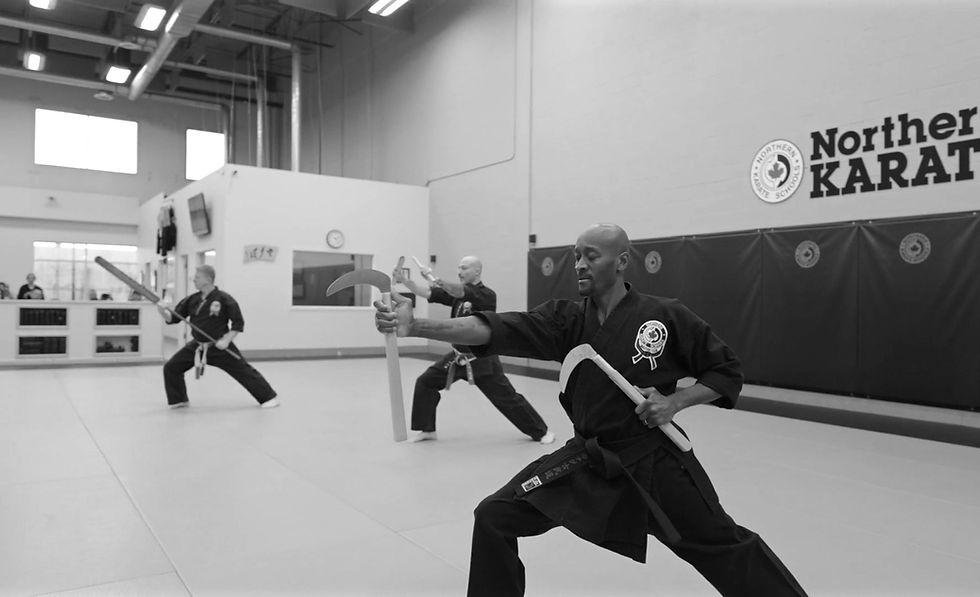
Teen Karate Tournaments - Preparation, Strategy, And Success
Updated: Apr 26
Master elite techniques and mental toughness to dominate your next youth karate challenge
Stepping onto the mats at a youth karate competition is a defining moment for any young martial artist. It is the culmination of hundreds of hours of sweat, discipline, and repetition. For teens at NKS Maple, moving from the dojo floor to the tournament arena represents a shift from learning a craft to testing one’s character under pressure.
Whether you are aiming for the local provincial circuit or eyeing a spot in the WKF Karate 1-Youth League, success isn't just about who can kick the highest. It’s about a comprehensive approach to tournament training for teens that balances physical peak performance with mental resilience.
2026 Teen Karate Tournaments
The world of competitive karate is highly structured to ensure fair and safe play. For teenagers aged 14–20, competitions are typically divided into three major World Karate Federation (WKF) sanctioned categories:
Cadet - Athletes aged 14–15. This is often the first elite taste of international-style rules.
Junior - Athletes aged 16–17. The intensity increases here as athletes prepare for adult-level speed.
U21 (Under-21) - Athletes aged 18–20. This serves as the bridge to the Senior divisions.
In 2026, the calendar is packed with opportunities. From the Karate Canada Junior National Championships (May 15-17, 2026) to the global WKF Youth League events in cities like Manila and Porec, there is a stage for every level of ambition.
Phase 1 - The 6-Week Physical Countdown
Teen karate tournaments are gruelling. A single day might involve five or six matches, each requiring explosive energy. To survive the brackets, you need more than just technique; you need a gas tank that doesn't run dry.
1. Cardiovascular Conditioning & Explosive Power
In the first three weeks of your prep, focus on high-intensity interval training (HIIT). Karate is a sport of stop-and-go bursts.
Drill - Perform 30 seconds of maximum-intensity burpees or mountain climbers, followed by 10 seconds of rest. Repeat for the duration of a standard match (2–3 minutes).
Strength - Prioritise compound movements like squats and push-ups to build the functional mass needed for impact and stability.
2. Technical Refinement - Kata and Kumite
Kata (Forms) - Don't just do the kata. Use the Slow-to-Fast method. Perform your kata at 20% speed, focusing on the precision of your footwork and the rotation of your hips. Once the muscle memory is flawless, introduce 100% speed and kime (focus).
Kumite (Sparring) - Practice scenario-based sparring. Don't just fight for the sake of fighting. Set scenarios - You are down by one point with 15 seconds left, go. This trains the brain to stay tactical when the lungs are burning.
3. Flexibility and Injury Prevention
High kicks like Ura Mawashi Geri (hook kick) require extreme hip mobility. Incorporate dynamic stretching before training and static stretching after. This doesn't just help with scoring; it prevents the common hamstring and groin pulls that can sideline an athlete weeks before a big event.
Phase 2 - The Mental Edge
Many teens lose their match in the staging area before they even step on the mat. Tournament training for teens must include a psychological component to combat tournament nerves.
Visualisation and Composure
Elite athletes use mental rehearsal. Spend 10 minutes each night visualising the tournament environment - the smell of the mats, the sound of the referee’s whistle, and yourself executing a perfect counter-punch. By the time you arrive at the venue, your brain feels like it has already been there.
Strategy - The Rulebook is Your Friend
You can be the better fighter and still lose if you don't understand the scoring. In WKF-style kumite, knowing the difference between Yuko (1 point), Waza-ari (2 points), and Ippon (3 points) is vital.
Study the specific rules for Senshu (the first unopposed point advantage). In many 2026 tournaments, having Senshu is the tie-breaker that determines the winner.
Phase 3 - The Taper and Logistics
As you move into the final two weeks, the goal shifts from building to preserving.
The Tapering Period (Weeks 5-6)
Continuing to train at 100% intensity right up until the day of the event leads to burnout and injury. Reduce your volume but keep the intensity high. Instead of an hour of sparring, do 15 minutes of lightning-fast drills. This keeps your nervous system sharp while allowing your muscles to repair.
Nutrition and Hydration
Your body is an engine. In the week leading up to the event:
Increase complex carbohydrates - Brown rice and sweet potatoes provide sustained energy.
Hydrate early - Don't try to catch up on water the morning of the event. Aim for consistent hydration 72 hours prior.
Recovery Kits - Pack a bag with a foam roller, electrolyte tablets, and instant cold packs. These are lifesavers during long tournament weekends.
Essential Gear Checklist For Teen Karate Tournaments
Nothing spikes anxiety like realising you forgot your mouthguard. Ensure your gear meets the standards of your specific federation (e.g., World Karate Federation-approved gear).
Item | Requirement |
Karategi | Clean, pressed, and correctly sized (sleeves above wrists). |
Protective Gear | WKF-approved gloves, shin/instep guards, and a chest protector. |
Safety | Mouthguard (mandatory) and groin guard. |
Administrative | Karate ID card, proof of age, and registration papers. |
The Role of Coaches and Parents
For the teens at NKS Maple, the support system is just as important as the training.
Coaches - Focus on building rapport. Some athletes need a rah-rah speech, while others need quiet tactical adjustments.
Parents - Emphasise the process over the podium. Karate is a lifelong journey. A loss in the Junior division is simply a data point for future improvement. For more on supporting youth in high-stakes environments, resources like Karate Canada offer excellent guidelines for long-term athlete development.
Frequently Asked Questions (FAQs)
How do I know if I’m ready for my first karate tournament?
You don’t need to be a perfect martial artist to compete. If you can perform your basic katas without forgetting the sequence and can spar safely with control, you are ready for a local-level event. Your sensei will usually give you the green light once they see you can handle the physical and emotional pressure of a dojo mock-match.
What is the difference between Kata and Kumite divisions?
Kata is a judged performance of choreographed patterns of movements. You are scored on technical precision, power, and rhythm. Kumite is point-based sparring against an opponent. In teen divisions, kumite is controlled contact, meaning you must show speed and technique without causing injury to your partner.
How are weight classes handled in teen karate competitions?
In the Cadet (14-15), Junior (16-17), and U21 divisions, kumite is split into specific weight categories (e.g., -52kg, -57kg, -63kg for male cadets). This ensures athletes compete against opponents of a similar size. Most tournaments hold an official weigh-in the morning of the event or the evening before.
Can I wear any karate uniform (gi) to a tournament?
Not necessarily. While local club tournaments are usually flexible, regional and national events often require a tournament cut gi, which has shorter sleeves and pants. For WKF-sanctioned events, you may even need a gi with specific red or blue embroidery on the shoulders to match your belt colour for that round.
How do I handle tournament jitters right before a match?
Anxiety is just your body’s way of preparing for action. Use the Square Breathing technique - inhale for 4 seconds, hold for 4, exhale for 4, and hold for 4. Focus on your warm-up routine rather than watching your opponents; staying active keeps your mind from overthinking the outcome.
Conclusion
While the goal of youth karate competition is to win, the true value lies in the growth that happens during the 6-week prep. You learn to manage stress, respect your opponents, and push past your perceived limits.
Whether you are competing in a local event or travelling for the Pan-American (PKF) Championships, remember - the mat is a mirror. It reflects the work you put in when no one was watching. Train hard, stay focused, and we will see you on the podium!