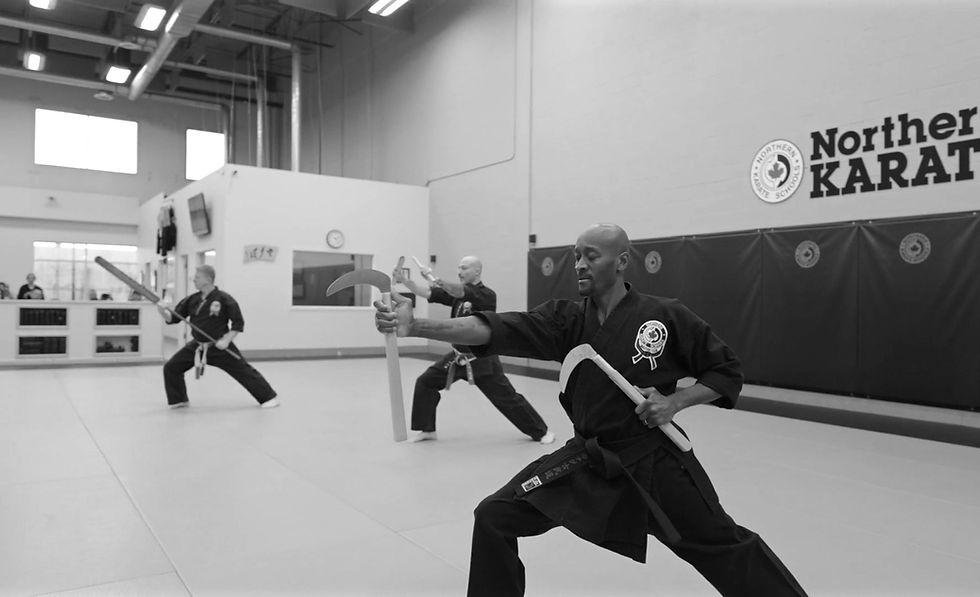
How Karate Helps Children With ADHD And Focus
Updated: Jun 24
How martial arts training transforms attention and builds
lifelong confidence in kids with ADHD.
As a parent of a child with Attention Deficit Hyperactivity Disorder (ADHD), finding the right extracurricular activity can feel like walking a tightrope. Traditional team sports, with their complex, unwritten social rules, periods of bench-sitting, and intense pressure to perform for a group, often lead to sensory overload, frustration, or bruised self-esteem.
If you are looking for an outlet that doesn't just burn off excess energy but actually trains the brain to lock in, martial arts training is an exceptional path forward.
At NKS Maple, we specialise in structured, high-energy martial arts programs designed to meet children exactly where they are. In this comprehensive guide, we will dive deep into the neurobiology of why karate works for the ADHD brain and provide actionable tips to help your child thrive inside and outside the dojo.
The ADHD Brain - The Under-Stimulation Paradox
To understand why karate is so effective, we must first dispel a common myth - ADHD is not a lack of attention; it is a challenge with attention regulation.
From a neurological standpoint, the ADHD brain suffers from chronic under-stimulation in the prefrontal cortex, the region responsible for executive functions like planning, working memory, and impulse control. When a child exhibits hyperactivity or distractibility, their brain is actively seeking sensory inputs to wake itself up.
When forced to sit still during a long classroom lecture or wait their turn in the outfield at a baseball game, a neurodivergent child's brain goes into sleep mode. To stay awake, the child might fidget, daydream, or act out.
Karate flips this script. It provides a fast-paced, highly engaging, and visually stimulating environment that prevents under-stimulation from occurring in the first place. Instead of fighting the child's need for movement, karate channels that surplus energy into deliberate, complex physical patterns.
5 Specific Ways Karate Transforms Focus and Attention
The structured environment of a dojo acts as an external scaffolding for a mind that struggles with internal organisation. Here is how the discipline of karate systematically rewires focus:
1. Strengthening Executive Function and Neural Networks
Research published by the National Institutes of Health (NIH) demonstrates that structured martial arts training actively strengthens the brain's neural networks, leading to measurable improvements in working memory and impulse control.
When learning a new karate stance or strike, a child cannot rely on autopilot. They must:
Inhibit impulses to look around the room.
Hold the instructor's visual demonstration in their short-term working memory.
Execute the physical movement while balancing.
This process breaks complex motor skills down into manageable steps, which directly exercises and boosts executive functioning. Over time, this mental workout builds stronger cognitive bridges, helping children translate focus from the training mat to the school desk.
2. Sensory Integration Through Routine and Repetition
Children with ADHD frequently experience sensory processing challenges. They may be hypersensitive to background noise or, conversely, crave intense physical contact to understand where their body is in space (proprioception).
Karate provides predictable, intense sensory input through structured, repeated practice. The resistance of striking a heavy pad, the crisp sound of a uniform snapping during a punch, and the firm footing on the mat all feed the brain's hunger for sensory data. This consistency helps:
Ease underlying anxiety by providing a predictable environment.
Build deep muscle memory.
Train the brain to follow sequential, multi-step directions without feeling overwhelmed.
3. Immediate Feedback Loops vs Delayed Gratification
In a traditional classroom or team sport, feedback is often delayed. A child might not know they made a mistake until a test is graded days later, or until a coach pulls them off the field at halftime. For an ADHD mind, this delay causes a total loss of engagement.
In contrast, karate classes are broken down into short, digestible drills and real-time demonstrations. Feedback is instantaneous:
If a stance is too wide, the student immediately loses balance.
If a block is too low, the training pad misses its target.
Instructors give immediate, constructive verbal and visual corrections.
This rapid-fire loop keeps neurodivergent children deeply immersed and anchored in the present moment, leaving no room for the mind to wander.
4. Goal-Oriented Self-Esteem and the Belt System
Many kids with ADHD face a steady stream of negative reinforcement throughout their day, being told to sit still, quiet down, or pay attention. This can severely damage their self-confidence.
Traditional Settings - Sit still, stop fidgeting, pay attention. (Negative Reinforcement)
Karate Dojo - Master this step, earn your stripe, level up. (Positive Micro-Goals)
The belt system in karate completely subverts this dynamic by introducing tangible, incremental goals. Children are not compared to their peers; they are measured against their own past performance. Earning a colored stripe on a belt offers immediate validation for their hard work. Mastering these micro-goals builds an unshakeable sense of self-worth, counteracting the discouragement they may experience in rule-heavy,
competitive team settings.
5. Cultivating the Mind-Body Connection
At its core, karate is moving meditation. Through deep diaphragmatic breathing techniques, targeted mindfulness exercises, and the concentrated memorisation of forms (katas), children learn the art of self-regulation.
During a kata, a child is taught to focus intensely on the micro-movements of their fists, the distribution of their weight, and the timing of their breath. This unifies the mind and body. When a child learns how to physically calm their heartbeat and steady their limbs after an intense drill, they unlock the ability to emotionally calm themselves during a stressful moment at school or home.
The Hidden Value of Physical Literacy
When evaluating programs for children with attention deficits, educators increasingly emphasise physical literacy, motivation, confidence, physical competence, and knowledge to value and take responsibility for engagement in physical activities for life.
For an ADHD child, physical literacy delivers a unique form of Information Gain that traditional exercises lack.
Feature | Traditional Exercise (e.g., Running, Cycling) | Karate & Martial Arts Training |
Cognitive Load | Low (Repetitive, linear movement) | High (Multidirectional, strategic planning) |
Spatial Awareness | Minimal tracking required | High tracking (Managing distance, positioning) |
Vestibular Stimulation | Consistent, unchanging | Dynamic (Spinning, dropping, rapid directional shifts) |
Social Scaffolding | Solitary or loosely unstructured | Highly structured peer-to-peer respect |
Because karate demands simultaneous cognitive and physical processing, it stimulates the cerebellum, the part of the brain that coordinates both motor movement and the speed of thought processing. By teaching a child how to move safely, react dynamically, and control their physical space, karate builds a profound level of body awareness that calms a hyperactive nervous system.
How Martial Arts Skills Transfer to Daily Life
The true magic of martial arts is that the lessons learned on the mats do not stay on the mats. Parents often report seeing a noticeable transformation in their child's daily routines:
Improved Morning and Bedtime Routines - The sequencing required to memorise a karate form helps children organise daily tasks. Just as a kata has a clear beginning, middle, and end, so does getting ready for school.
Enhanced Social Capital - Because karate focuses heavily on mutual respect, bowing, and keeping hands to oneself, children develop clearer physical boundaries, making it easier for them to make and keep friends.
Frustration Tolerance - Falling down, missing a kick, or needing multiple attempts to master a technique teaches structural resilience. Children learn to view mistakes not as permanent failures, but as data points on the path to mastery.
Karate For Children With ADHD - Finding the Perfect Fit for Your Child
While martial arts are highly beneficial, the wrong environment can lead to early disengagement. If a class involves too much standing in long lines or listening to lengthy lectures, a child with ADHD may quickly tune out.
To give your child the best possible experience, keep these professional tips in mind:
Observe a Live Class First
Every dojo has its own distinct culture, energy level, and teaching philosophy. Schedule a time to watch a class in action before enrolling. Look closely at how the instructors manage the room:
Are they keeping the kids moving constantly?
Do they use positive reinforcement, or do they rely on rigid, military-style scolding?
Do they seamlessly pivot when a student loses track of the drill?
Choose the Right Style for Their Movement Profile
Different martial arts cater to different sensory preferences.
Striking Arts (Karate, Taekwondo) - Excellent for children who prefer crisp, linear movements, clear visual boundaries, and individual space.
Grappling Arts (Judo, Brazilian Jiu-Jitsu) - Highly beneficial for kids who crave deep pressure, heavy tactile sensory input, and close physical contact. For example, Brazilian Jiu-Jitsu for children is like physical chess for kids and improves executive function (focus, memory, and impulse control), builds emotional resilience, and increases blood flow to the brain.
Maintain Open Communication with the Sensei
Don't hesitate to share your child's ADHD diagnosis with the instructor. A skilled sensei will welcome this insight. Let them know what triggers your child's frustration, what strategies work best to redirect their focus, and how to effectively channel their hyperfocus into positive reinforcement.
Here are 5 highly relevant, parent-focused FAQs that integrate your target keywords, address common objections, and maintain a natural, helpful content flow for the NKS Maple blog.
Frequently Asked Questions
1. Will martial arts training make my hyperactive child more aggressive?
This is the most common concern parents have, but the reality is exactly the opposite. Karate teaches children that physical techniques are exclusively for self-defence and dojo practice. Because karate provides a constructive, high-energy sensory and physical outlet, children can safely burn off surplus hyperactive energy. Rather than triggering aggression, learning the discipline of a strike helps kids with ADHD develop better impulse management and emotional self-regulation, making them calmer at home and in school.
2. My child has a very short attention span. Can they handle a full karate class?
Absolutely. Traditional sports often involve long periods of standing in an outfield or waiting on a bench, which causes an ADHD brain to lose focus due to under-stimulation. Karate classes are structured specifically to prevent this. A great program breaks lessons down into short, digestible drills and rapid-fire visual demonstrations. This fast-paced environment keeps karate adhd children deeply immersed in the present moment, meaning they rarely have time to become distracted or bored.
3. What is the best age for a child with ADHD to start martial arts focus kids programs?
While every child develops at their own pace, many children with attention deficits find great success starting around ages 5 to 7. At this stage, their brains are highly receptive to developing foundational martial arts focus kids' skills, such as physical literacy, balance, and basic executive functioning. However, older children and teens benefit just as much, as the goal-oriented belt system provides them with excellent structural support during crucial developmental years.
4. How long does it take to see improvements in my child's attention deficit?
Consistency is key when using karate attention deficit strategies. Many parents notice subtle, immediate changes, such as a calmer demeanour and better sleep, right after class because of the intense physical exertion. Over the course of 3 to 6 months of regular practice (usually twice a week), you can expect to see deeper cognitive benefits, such as improved working memory, stronger frustration tolerance, and an enhanced ability to follow multi-step directions at home.
5. How do I know if karate is a better choice for my child than a team sport like soccer?
To answer that, you need to explore this guide on Karate for children. In simpler terms, if your child struggles with the complex social dynamics, delayed feedback, or performance anxiety common in team sports, karate is often an ideal alternative. Karate focuses strictly on individual progression rather than team competition. Your child is never compared to a teammate; they only compete against their own past performance. This removes the intense social pressure that can cause anxiety for kids with ADHD, allowing them to build goal-oriented self-esteem at their own comfortable pace.
Experience the Difference at NKS Maple
Success in martial arts ultimately depends on finding the right mentors. The instructor’s ability to connect with, adapt to, and inspire neurodivergent students is the single most critical factor in preventing burnout or disengagement.
At NKS Maple, our instructors are specifically trained to create an inclusive, high-energy environment where children with attention deficits can channel their vibrant energy into lasting cognitive skills. We focus on building character, fostering self-regulation, and celebrating every single breakthrough along the way.
Ready to see how martial arts can unlock your child's true potential? Contact NKS Maple today to book an introductory class and take the first step toward building focus, confidence, and lifelong resilience.